

Short answer: for everyday dexterity and grip, the Ergodyne ProFlex 812 ($22.99) is the snug synthetic glove I reach for most, and the Black Stallion 99 PLUS Tool Handz ($15.99) is the best-fitting one for less money. If you want maximum grip on dry parts for almost nothing, the Ergodyne ProFlex 7001 nitrile dry-grip glove is $7.99 and the only one here the listing calls touchscreen capable. The moment there are sharp edges in play, step up to the Ergodyne ProFlex 812CR6 — the only cut-rated glove in this guide. Every glove below is a real, in-stock listing at Working Person's Store as of July 12, 2026, with prices and specs pulled straight off the product page.
One rule I follow in a hand-protection guide: every rating traces back to the actual listing. If a listing does not state an ANSI or EN 388 number, I do not hand the glove one — padding is not a rating, and a thick knuckle pad is not an impact level. Five of these seven gloves carry no formal cut or impact rating at all. That is normal for mechanic gloves and fine for the work; you just need to know which two are different and what they actually cover.
Key Takeaways
- These are dexterity gloves, not armor. All seven run a thin synthetic-leather or coated-knit palm against a stretch mesh or spandex back. That is the point — snug synthetic beats bulky leather when you are handling fasteners and small parts.
- Only two carry any ANSI or EN mark. The ProFlex 7001 states ANSI level 2 for abrasion; the ProFlex 812CR6 states ANSI/ASTM Cut A3 and EN 388: 3543 C. The other five (812, 710, GX1010-HB, 99 PLUS, 19 FX) state no ANSI/ISEA or EN 388 rating on their listings.
- No glove here is a marked impact glove. The ProFlex 710's Akton knuckle pad and the GX1010-HB's foam dorsal guards add genuine physical padding, but neither listing states an ANSI/ISEA 138 level — and that standard requires the achieved level to be marked on the glove itself.
- Touchscreen is one glove, not all seven. Only the ProFlex 7001 is listed as touchscreen capable. The rest do not state it, so do not assume your phone will work through them.
- Cut protection has a number. A3 on the ANSI/ISEA 105 A1–A9 scale means 1,000 grams of cutting force on the TDM-100 test. That is the 812CR6, and it is the only glove here with a cut level.
- Price range is wide: $7.99 (ProFlex 7001) to $41.99 (ProFlex 812CR6). For most mechanic work you are spending $12 to $23.
What the ratings on a mechanic glove actually mean
Mechanic gloves live in a gray zone. Most are sold on fit and grip rather than a spec sheet, and for wrench work that is honest. But two gloves here do carry marks, and it pays to know what those numbers mean — and what they do not.
Cut resistance: ANSI/ISEA 105 (A1–A9)
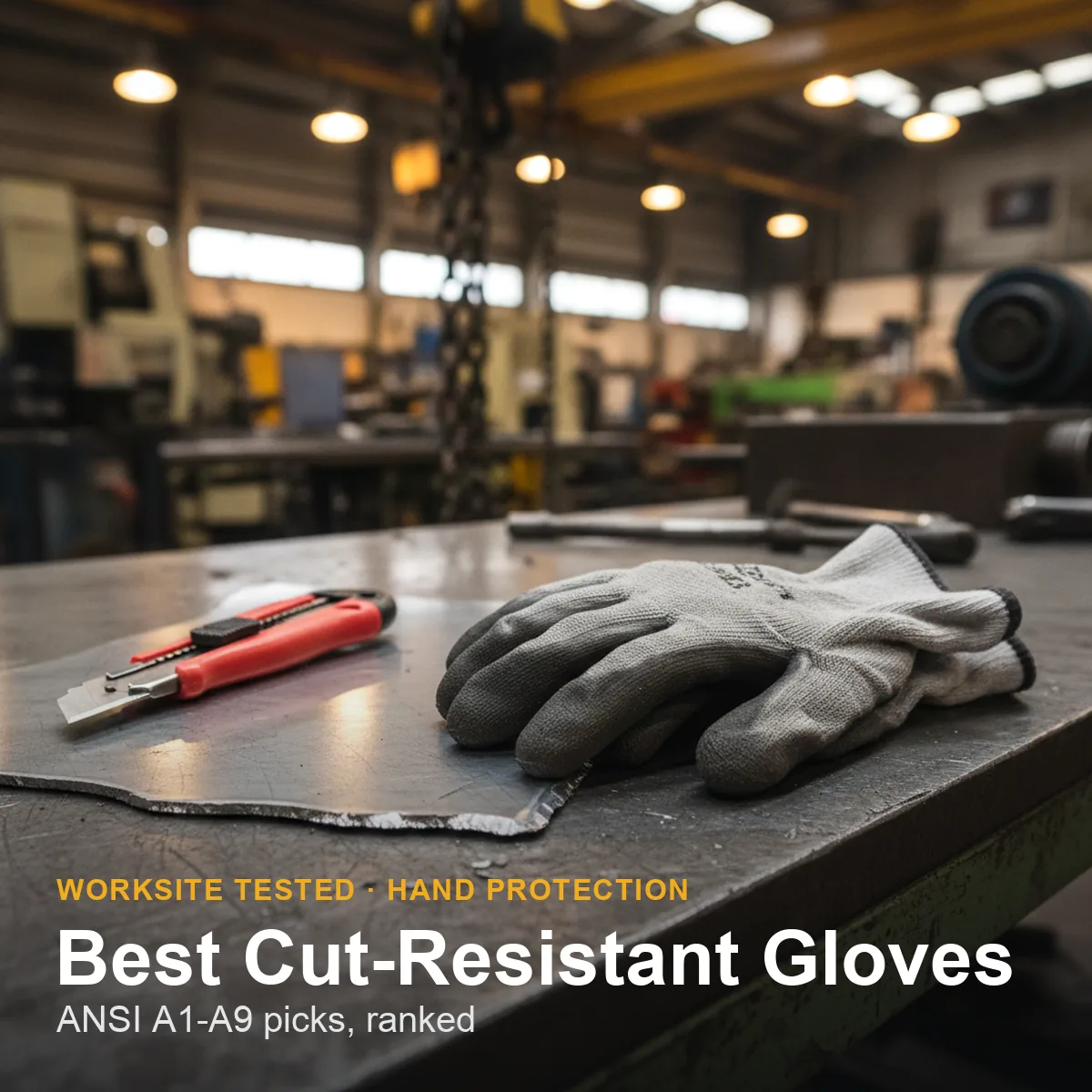
ANSI/ISEA 105 rates cut resistance on a nine-level A1–A9 scale by the grams of force needed to cut through the material using the TDM-100 (tomodynamometer) test: A1 is 200 g, A2 500 g, A3 1,000 g, A4 1,500 g, A5 2,200 g, A6 3,000 g, A7 4,000 g, A8 5,000 g, and A9 is 6,000 g or more. The only glove in this guide with a cut level is the ProFlex 812CR6, which the listing states as ANSI/ASTM Cut A3 — 1,000 g. Mid-tier protection: right for sheet metal and trim, not for handling blades.
Impact resistance: ANSI/ISEA 138 (Levels 1–3)
ANSI/ISEA 138-2019 rates back-of-hand impact protection on three levels by the mean force transmitted through the glove, where lower transmitted force means more protection: Level 1 allows an average of 9 kN or less, Level 2 allows 6.5 kN or less, and Level 3 allows 4 kN or less. The test method drops a 2.5 kg (5.5 lb) striker at 5 joules of impact energy on defined back-of-hand points, hitting the knuckles four times and the fingers and thumb five times, and the achieved performance level must be displayed directly on the glove.
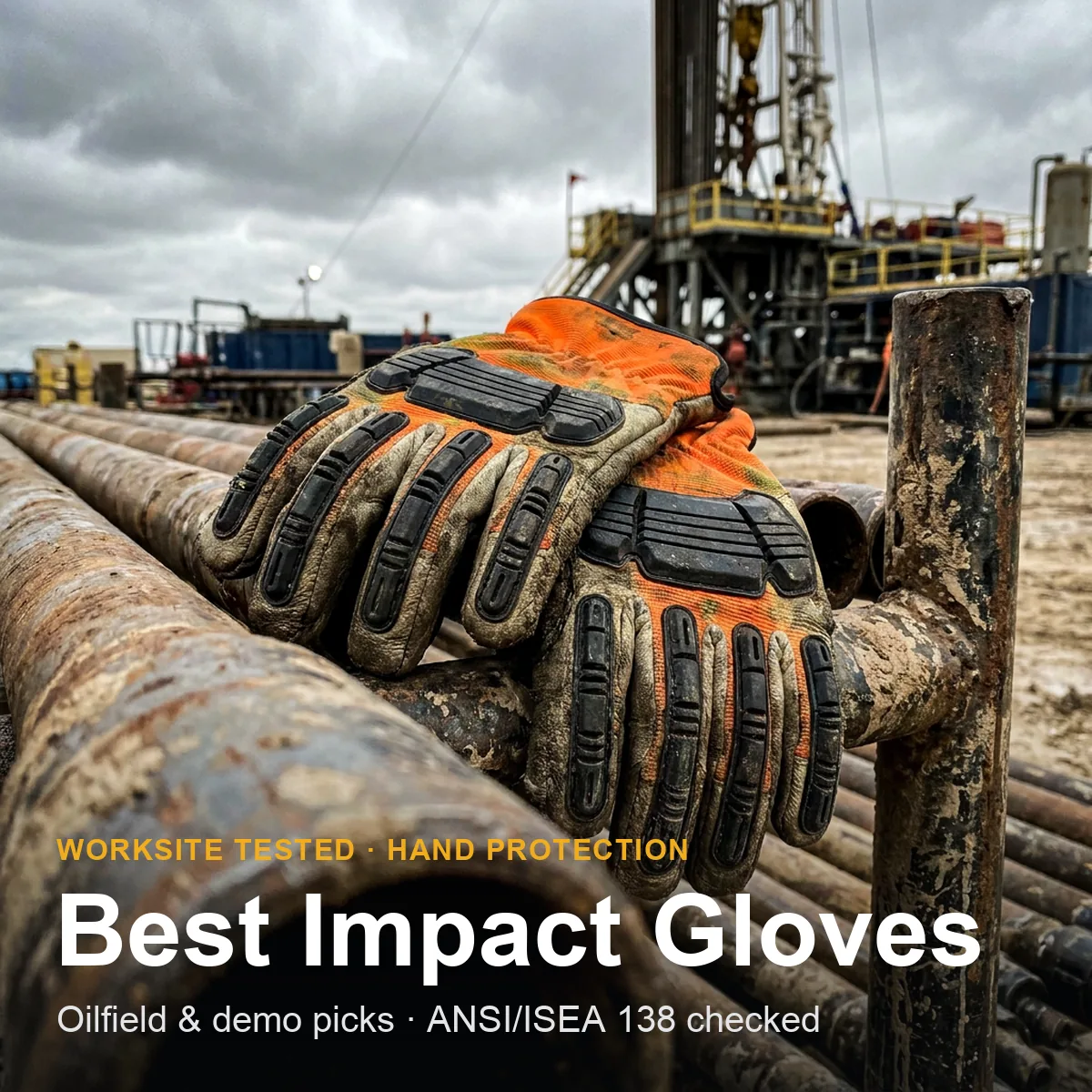
Here is the honest part: none of the seven gloves in this guide carry a marked ANSI/ISEA 138 level. The ProFlex 710 has an Akton visco-elastic knuckle pad and the GX1010-HB has foam-padded dorsal guards, but neither listing states a level — and since the standard requires the level to be marked on the glove, no marking means no verified level. I am not going to assign one. If your task assessment calls for documented knuckle-strike protection, buy a glove that actually shows an ISEA 138 Level 1, 2, or 3 mark. See our impact glove guide for that hazard.
ANSI vs EN 388: why the 812CR6 shows two codes
ANSI/ISEA 105 scores cut resistance on the A1–A9 grams scale, while EN 388's ISO 13997 cut result is measured in newtons and scored A–F, so one glove can carry both an ANSI cut level and a separate EN 388 code. The 812CR6 does exactly that: ANSI A3 and EN 388: 3543 C. The trailing C is the EN 388 ISO 13997 cut grade — a different test on a different scale, which is why the same glove shows two cut marks that look nothing alike. Neither one is "better"; they are two systems describing the same material.
All 7 mechanic gloves at a glance
| Glove | Palm / back | Cut rating | Impact / knuckle | Best for | Price |
|---|---|---|---|---|---|
| Ergodyne ProFlex 812 | Synthetic leather / poly mesh | None stated | None stated | Snug all-round shop glove | $22.99 |
| Black Stallion 99 PLUS | Titan synthetic leather / action spandex | None stated | None stated | Snuggest fit for the money | $15.99 |
| Ergodyne ProFlex 7001 | Nitrile dry-grip / 18-gauge knit nylon-spandex | None stated | None stated | Best grip, touchscreen, budget | $7.99 |
| Ergodyne ProFlex 812CR6 | Armortex-backed synthetic / poly mesh | ANSI/ASTM Cut A3 · EN 388: 3543 C | None stated | Cut protection around edges | $41.99 |
| Ergodyne ProFlex 710 | Synthetic leather + textured PVC / stretch spandex | None stated | Akton knuckle pad (no stated level) | Knuckle padding for tool work | $36.99 |
| Black Stallion GX1010-HB | Synthetic leather + PVC / padded hi-vis spandex | None stated | Foam dorsal guards (no stated level) | Hi-vis with back-of-hand padding | $20.99 |
| Black Stallion 19 FX BLK | Synthetic leather / spandex | None stated | None stated | Cheapest flexible mechanic glove | $11.99 |
1. Ergodyne ProFlex 812 — best snug all-round mechanic glove
The 812 handles most of what a shift throws at a mechanic: turning wrenches, pulling parts, assembly, warehouse work. The synthetic leather palm is thin enough to keep fingertip feel but carries a reinforced thumb saddle exactly where utility gloves wear through first. The poly mesh back breathes, and the low-profile molded hook-and-loop closure keeps the wrist snug without a bulky cuff catching on everything. The listing states no ANSI/ISEA or EN 388 rating, and the glove does not pretend to be a cut or impact glove — match it to plain-duty dexterity work and it is the balanced pick at $22.99.
- Grab these if: you want one snug, breathable, durable glove for general mechanic and assembly work.
- Skip if: you need cut protection (get the 812CR6) or knuckle padding (get the 710).
Check price at Working Person's Store →
2. Black Stallion 99 PLUS Tool Handz — snuggest fit for the money
If dexterity is the deciding factor, the 99 PLUS is the tightest, most hand-hugging glove in this roundup — Black Stallion builds the Tool Handz around a snug fit. The Titan synthetic leather palm carries reinforced fingertips and reinforced contact zones, so the two areas that fail fastest on a mechanic glove are the two areas built up here. The action spandex back stretches with your hand instead of fighting it. No ANSI/ISEA or EN 388 rating on the listing, and for a close-fitting everyday tool-work glove it does not need one. At $15.99 this is the best snug-fit value on the list.
- Grab these if: you want the closest fit and best finger feel without paying up.
- Skip if: you need a rated cut or impact glove, or want a dry-grip coating for slick parts.
Check price at Working Person's Store →
3. Ergodyne ProFlex 7001 — best grip and best value, touchscreen capable
At $7.99 this is the cheapest glove here and the one to try first if grip is your problem. It is built differently from the leather-palm picks: an 18-gauge seamless knit nylon/spandex shell — thin, breathable, second-skin fit — with a nitrile DSX dry-grip coating on the palm that grabs dry parts and fasteners. The listing states ANSI level 2 for abrasion resistance, and I will report that because it is on the page, but there is no cut or impact rating, so keep it off edges and away from strikes. It is the only glove in this guide the listing calls touchscreen capable, and it is machine washable, which matters when you go through gloves fast.
- Grab these if: you want maximum grip and finger feel on dry small-parts work at the lowest price here.
- Skip if: you are handling sharp edges (no cut rating) or need back-of-hand protection.
Check price at Working Person's Store →
4. Ergodyne ProFlex 812CR6 — the one to grab when there are edges
This is the only cut-rated glove in the roundup, and it is the cut-resistant sibling of the 812: the same snug utility platform, but with an Armortex-backed synthetic palm the listing rates ANSI/ASTM Cut A3 (1,000 g on the TDM-100 test) and EN 388: 3543 C. That makes it the pick for sheet metal, trim, and fabricated parts where a plain mechanic glove gets sliced — the listing also names electrical, assembly and fabrication, construction, and pulp and paper work. The breathable poly mesh construction keeps it from feeling like a gauntlet, but cut resistance always costs a little dexterity against the plain 812; that is the trade every cut glove makes. At $41.99 it is the most expensive glove here and only worth it if your hands are near something that can cut them.
- Grab these if: you handle sheet metal, trim, or fabricated edges and want real cut protection (A3) in a mechanic-style fit.
- Skip if: there are no sharp edges in your work — save the money and run the 812 or the 7001.
Check price at Working Person's Store →
5. Ergodyne ProFlex 710 — best knuckle padding for tool work
When the back of your hand keeps catching metal — tight engine bays, impact-tool work, heavy material handling — the 710 is the padded option here. It pairs a synthetic leather palm and fingertips reinforced with abrasion-resistant textured PVC against a breathable 3-layer stretch spandex back, plus a neoprene knuckle pad using Akton visco-elastic polymer to dampen shock. Reinforced fingertips and a terry thumb brow-wipe round it out. The honest caveat stands: the listing states no ANSI/ISEA 138 impact level, so that knuckle pad is bump and comfort protection, not certified impact protection. At $36.99 you are paying for the reinforced palm and the pad, not for a spec.
- Grab these if: you want reinforced palm protection plus a knuckle pad for tool and material-handling work.
- Skip if: you need a marked ISEA 138 impact glove, or you want the thinnest possible dexterity.
Check price at Working Person's Store →
6. Black Stallion GX1010-HB — best hi-vis mechanic glove with dorsal guards
The GX1010-HB is the visibility-and-padding pick: a padded hi-vis yellow spandex back with reflective padded knuckles, aimed by the listing at mechanics and oil and gas. On feel it is the most protective back-of-hand glove here — heavy-duty dorsal guards with thick foam padding over a synthetic leather palm with PVC reinforcements. Neoprene slip-on cuffs make it quick on and off with no closure to fumble in the cold. Same standard applies as the 710: the dorsal guards are real armor, but the listing states no ANSI/ISEA 138 impact level, so it is not a marked impact glove. At $20.99 it is a fair price for a padded hi-vis mechanic glove.
- Grab these if: visibility matters on your site and you want foam back-of-hand padding with a quick slip-on cuff.
- Skip if: you want the thinnest dexterity glove, or you need a certified impact or cut rating.
Check price at Working Person's Store →
7. Black Stallion 19 FX BLK FlexHand — cheapest flexible mechanic glove
The 19 FX is the no-frills value play: $11.99 for a reinforced, flexible synthetic leather palm, a stretch spandex back, and wrist straps that let you cinch the fit tighter for better dexterity. There is no padding, no coating, and no rating — it is a plain, snug, flexible everyday glove for tool work, and most shop days that is all the job asks for. The reinforced fingertips give it a little more life than a bare knit, and adjustable wrist straps are a nice touch you do not usually get at this price. If you just want the cheapest full-finger glove that still fits close, this is it.
- Grab these if: you want the lowest-cost snug mechanic glove with an adjustable fit.
- Skip if: you want a dry-grip coating, knuckle padding, or any cut rating.
Check price at Working Person's Store →
Synthetic leather palm vs nitrile dry-grip coating
Synthetic leather palm (the 812, 710, 812CR6, and all three Black Stallion gloves): a thin panel of synthetic leather — often with PVC or Armortex reinforcement — over a stretch mesh or spandex back. It gives you durability and abrasion resistance on the palm while staying snug, and it takes reinforcement well: thumb saddles, fingertip caps, cut liners, knuckle pads. This is the classic mechanic-glove build for handling parts and tools all day.
Nitrile dry-grip coating (the 7001): a seamless knit shell dipped in nitrile on the palm. It is thinner and more breathable than a leather-palm glove, fits like a second skin, and grips dry parts better because the coating texture bites. The trade-off is less structure and no reinforced panels — it is a grip-and-feel glove, not a protective one. For small-parts assembly and anything where you are constantly picking things up, the coated knit wins on grip; for durability and reinforcement, the synthetic leather palm wins. If your hands need real hide instead, that is a different category — see our leather work glove guide.
Reading a mechanic glove listing: padding is not a rating
These listings mix real ratings with feature language, and the easy mistake is reading a padded feature as certified protection. Here is how I read them:
- "ANSI level 2 for abrasion resistance" (ProFlex 7001) — a stated abrasion rating from the listing. I report it as the listing states it. It says nothing about cut or impact.
- "ANSI/ASTM Cut A3" and "EN 388: 3543 C" (ProFlex 812CR6) — two real cut marks on two different standards. A3 is the ANSI/ISEA 105 grams scale (1,000 g on the TDM-100); the trailing C is the EN 388 ISO 13997 cut grade, measured in newtons. Both describe the same glove.
- "Akton visco-elastic knuckle pad" / "heavy-duty dorsal guards with foam padding" (ProFlex 710, GX1010-HB) — physical features, not ratings. ANSI/ISEA 138 requires the achieved level to be displayed on the glove; neither listing states one, so I will not call either an impact-rated glove.
- "Touchscreen capable" (ProFlex 7001 only) — a manufacturer feature claim, stated on one listing out of seven. Do not assume it carries across a product line.
- "No rating stated" (812, 710, GX1010-HB, 99 PLUS, 19 FX) — a plain synthetic mechanic glove with no cut or impact mark. Normal, and fine for dexterity work. It just means it is the wrong glove for a cut or impact hazard.
Frequently Asked Questions
What makes a good mechanic glove for dexterity?
Snug synthetic gloves with a thin synthetic-leather palm and a stretch mesh or spandex back give the closest fit and the best fingertip feel for handling fasteners and small parts. In this guide the standouts for fit are the Ergodyne ProFlex 812 (synthetic leather palm, poly mesh back) and the Black Stallion 99 PLUS Tool Handz snug-fit glove (Titan synthetic leather palm). A coated knit like the ProFlex 7001 is thinner and grippier still, at the cost of reinforcement.
Are these mechanic gloves touchscreen capable?
Only where the listing says so. The Ergodyne ProFlex 7001 nitrile dry-grip glove is listed as touchscreen capable. The ProFlex 812, the ProFlex 710, and the Black Stallion mechanic gloves do not state touchscreen capability on their Working Person's Store listings, so it should not be implied — treat only the 7001 as touchscreen-ready.
Do mechanic gloves need an ANSI cut or impact rating?
General mechanic and utility gloves often carry no formal ANSI rating, and that is fine for plain shop work. Among these picks only the Ergodyne 812CR6 states a cut rating (ANSI/ASTM Cut A3, EN 388: 3543 C) and only the 7001 states an ANSI abrasion level (2). If the job involves sharp edges, use an A-rated cut glove; for knuckle-impact work, look for a glove with an ANSI/ISEA 138 level marked on the glove itself.
What is the difference between an impact glove and a cut-resistant glove?
Impact protection (ANSI/ISEA 138, Levels 1 to 3) guards the back of the hand and knuckles from blunt strikes using TPR or padded guards — like the Black Stallion GX1010-HB's dorsal guards or the ProFlex 710's Akton knuckle pad, though neither listing states a marked 138 level. Cut resistance (ANSI/ISEA 105, A1 to A9) measures how well the palm material resists a blade — like the ProFlex 812CR6's Armortex palm rated ANSI A3. They protect against different hazards, and a glove can be built for one, the other, or both.
How much do mechanic gloves cost?
On Working Person's Store these synthetic mechanic and utility picks range from about $7.99 for the Ergodyne ProFlex 7001 dry-grip glove and $11.99 for the Black Stallion 19 FX, up to $36.99 for the padded ProFlex 710 trades glove and $41.99 for the cut-resistant ProFlex 812CR6. For most everyday mechanic work you are spending $12 to $23. Prices reflect the listings at time of research and can change.
Why Trust This Guide
This guide is written and reviewed by Marco Reyes, an independent, bilingual (EN/es-US) work-safety-gear reviewer who covers PPE and workwear for WorkSite Tested from the tradesman's side of the job. Every recommendation is built on the published standards (ANSI/ISEA 105 for cut resistance, ANSI/ISEA 138 for back-of-hand impact, EN 388 for the European mechanical-protection marks), manufacturer spec sheets and product labels, and what tradespeople actually report — and I tell you when a number is a manufacturer claim versus an independent standard. All seven products in this guide were pulled live from Working Person's Store on July 12, 2026, confirmed in stock, and verified against the listing specs; no cut, impact, or abrasion rating was inferred, extrapolated, or borrowed from another glove. Standard facts were cross-checked against independent technical sources on ANSI/ISEA 138 (magidglove.com, hexarmor.com), ANSI/ISEA 105 (wcsafety.com), and the ANSI-versus-EN 388 distinction (ergodyne.com). I earn an affiliate commission if you buy through some of my links, at no extra cost to you, and I never rank by commission over safety — see our affiliate disclosure.